SEVEN TYPES OF PLASTICS USED IN THE AUTOMOTIVE INDUSTRY

SEVEN TYPES OF PLASTICS USED IN THE AUTOMOTIVE INDUSTRY
Over the last few decades, plastics have become a vital part of modern vehicle design and production. The rapid expansion of the global automotive market has pushed manufacturers to adopt materials that are lighter, more economical, and more sustainable. Plastics meet these demands while also improving performance and safety.
To illustrate, a bumper made from engineering compounds can be up to 50 percent lighter than one produced from traditional materials, yet it can absorb several times more impact energy. By using plastics in both structural and decorative components, automakers are able to lower manufacturing costs while enhancing efficiency and design flexibility.
In this article Baspar Tose Davam Shimi explores the most widely used plastics in automotive manufacturing, their typical applications, and the advantages each material offers.
Key Highlights
- Materials such as polypropylene and nylon help reduce vehicle weight and improve fuel economy.
- Engineering plastics like ABS and polycarbonate play an important role in safety and visual quality.
- Lightweight polymers contribute directly to lower emissions and better energy efficiency.
- TPE materials are ideal for parts that require flexibility, sealing, and long-term durability.
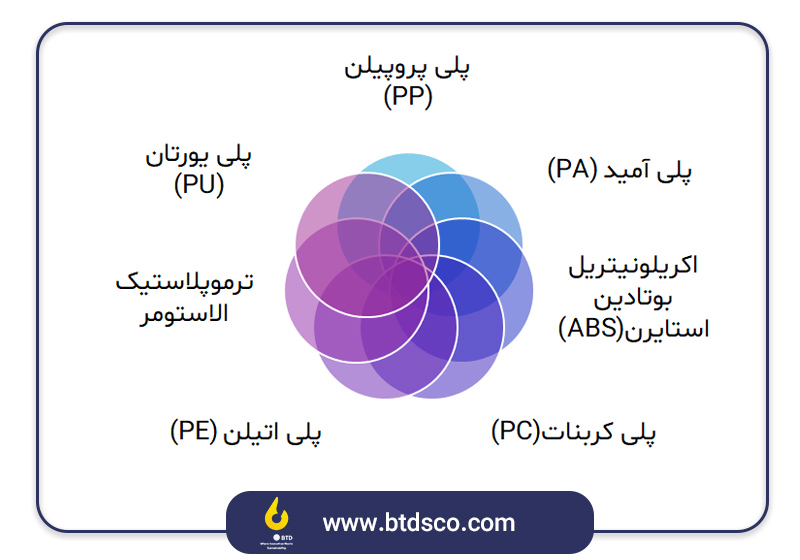
1. Polypropylene (PP)
Polypropylene is one of the most frequently used plastics in the automotive industry due to its affordability, resistance to chemicals, and strong durability. Its low density makes it especially valuable for reducing overall vehicle mass.
Applications:
PP is commonly found in dashboards, interior trims, bumpers, door panels, and wheel arch liners. Its lightweight nature helps manufacturers improve fuel efficiency without compromising strength.
2. Polyamide (PA) – Nylon
Polyamide, often referred to as nylon, is known for its high mechanical strength, excellent heat resistance, and stability under stress. These properties make it suitable for demanding automotive environments.
Applications:
Nylon is widely used in engine-related parts, fuel system components, and electrical connectors. Its ability to withstand high temperatures and pressure ensures reliable performance over time.
3. Acrylonitrile Butadiene Styrene (ABS)
ABS is a robust plastic valued for its impact resistance and smooth surface finish. It is often selected for parts where appearance and durability are equally important.
Applications:
Typical uses include instrument panels, interior trims, center consoles, and wheel covers. ABS provides a high-quality finish while maintaining resistance to everyday wear and impact.
4. Polycarbonate (PC)
Polycarbonate stands out for its exceptional impact strength and transparency. Despite being lightweight, it offers impressive toughness, making it suitable for safety-related components.
Applications:
This material is commonly used in headlight lenses, automotive glazing, and mirror housings. Its clarity and strength make it ideal for parts that require both visibility and protection.
5. Polyethylene (PE)
Polyethylene is a cost-effective plastic with excellent resistance to chemicals, fuels, and oils. Its flexibility allows it to absorb stress without cracking or failing.
Applications:
PE is primarily used in fuel tanks, fluid containers, and battery housings, where chemical stability and long-term durability are essential.
6. Thermoplastic Elastomers (TPE)
Thermoplastic elastomers combine rubber-like elasticity with the processing advantages of plastics. This unique combination makes them highly versatile in automotive design.
Applications:
TPE materials are used in seals, gaskets, weatherstrips, and exterior trims. Their flexibility and resistance to temperature changes make them ideal for both interior and exterior applications.
7. Polyurethane (PU)
Polyurethane is widely used in automotive seating and cushioning due to its excellent energy absorption and comfort properties. It also provides strong resistance to repeated impacts.
Applications:
PU is commonly found in seat cushions, headrests, armrests, door panels, and bumper components. Its shock-absorbing capability enhances passenger safety and ride comfort.


News