Glow Wire Test and Its Importance in Evaluating Flame-Retardant Polyamide and Polypropylene Compounds
Glow Wire Test and Its Importance in Evaluating Flame-Retardant Polyamide and Polypropylene Compounds
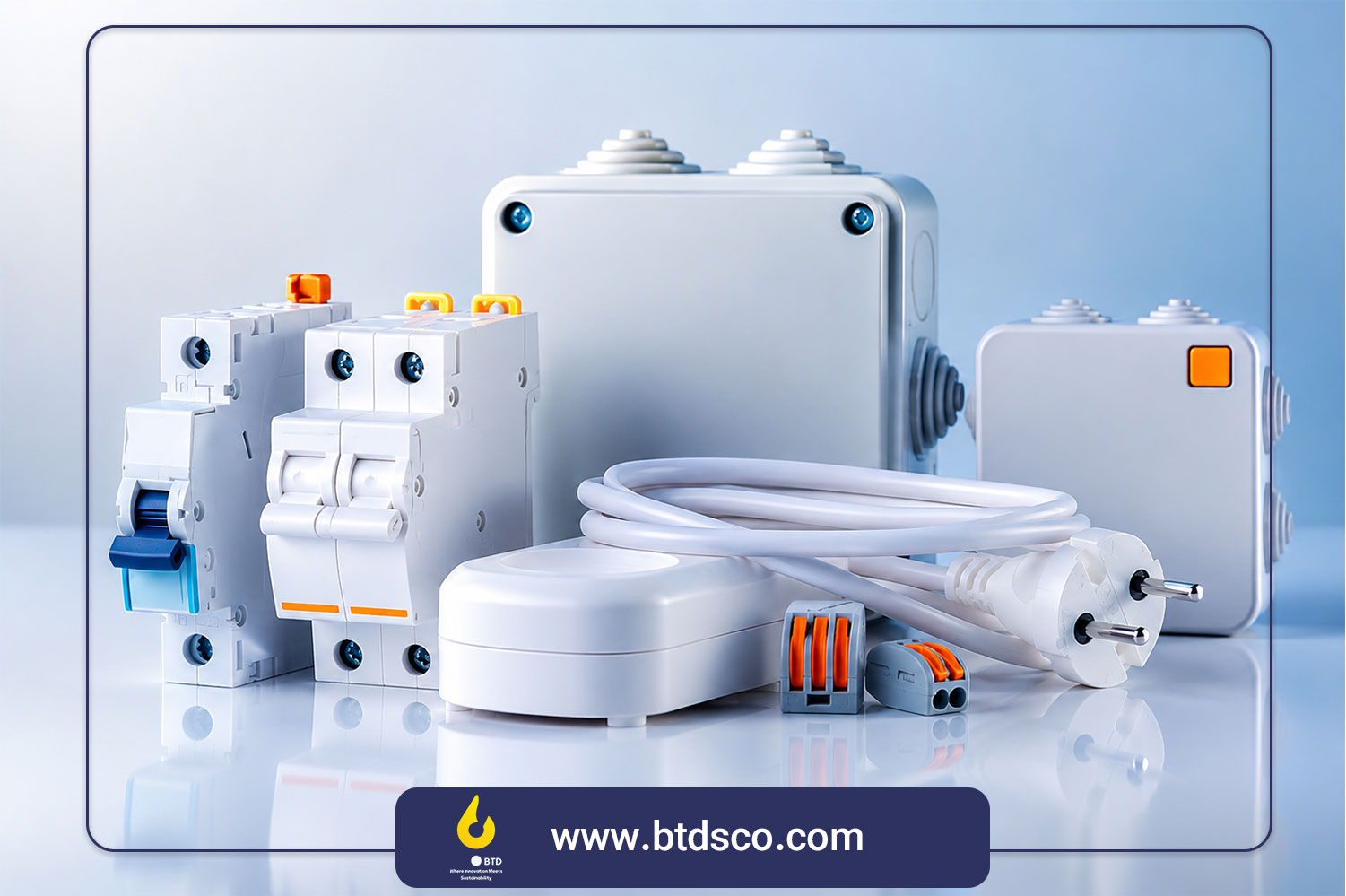
Safety in the use of electrical and electronic devices particularly in the power and electronics industry, lighting systems, and household appliances—is of critical importance. One of the key factors influencing the safety of these products is the flammability behavior of the polymeric materials and engineering compounds used in their construction. Many electrical components are manufactured from polymers such as polyamide (PA), polypropylene (PP), acrylonitrile butadiene styrene (ABS), and polycarbonate/acrylonitrile butadiene styrene (PC/ABS), each of which exhibits different thermal and fire behavior depending on its chemical structure. Therefore, selecting materials with controlled thermal resistance and flammability is one of the fundamental requirements for safe product design.
One of the most important tests used to evaluate these characteristics is the Glow Wire Test. In this article, Baspar Tose’e Davam Shimi examines the Glow Wire Test in the evaluation of flame-retardant compounds.
Fire resistance refers to the ability of a material to prevent the spread of flame or resist burning when exposed to a heat source. The most common method for increasing this property in polymers is the use of flame retardants, which improve the thermal behavior of the polymer and significantly reduce the risk of fire.
Polymer compounds used in electrical devices and household appliances are typically combined with reinforcing materials such as natural or synthetic fibers to produce compounds with improved mechanical and thermal properties. Additionally, additives are incorporated to enhance properties such as strength, hardness, density, moldability, and especially fire resistance.
What Is the Glow Wire Test?
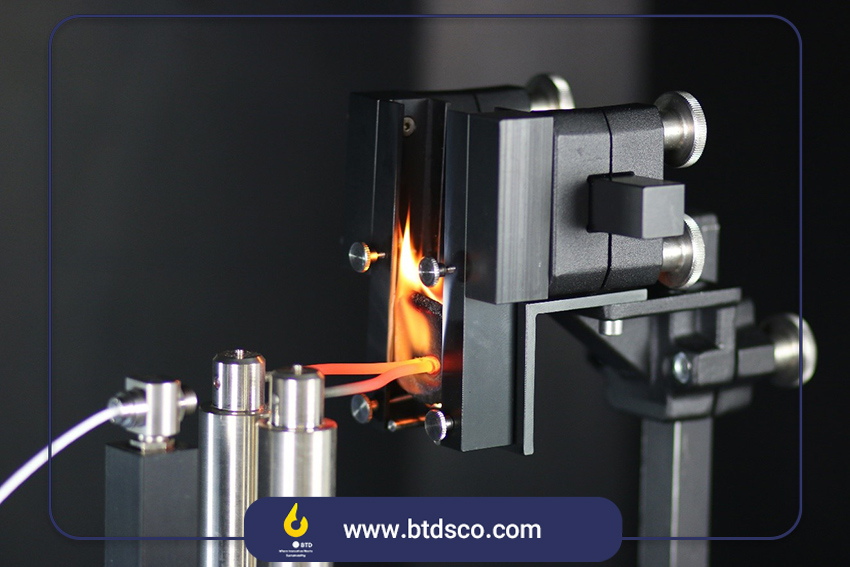
The Glow Wire Test is a fundamental fire-testing method designed to simulate electrical short-circuit conditions. In this test, a heated glow wire represents an electrical arc resulting from a short circuit, which generates intense heat and may ignite combustible materials. The glow wire method is widely used to evaluate the flammability characteristics of polymeric materials such as polyamide, polypropylene, and others commonly used in electrical components.
The procedures and requirements of the Glow Wire Test are fully described in the IEC 60695-2 standard series, with IEC 60695-2-10 detailing the equipment and general procedures used during the test.
In this test, a heating element is raised to a preset temperature between 650°C and 960°C. The heated element is then pressed against the surface of the test specimen with a force of 1 ± 0.2 N. The maximum penetration depth allowed is 7 ± 0.5 mm, with a contact duration of approximately 30 seconds.
The heating element is typically made of nickel-chromium wire (80/20) with a diameter of about 4 mm, bent to form a tip radius of 1 cm.
The purpose is to determine whether the material:
-
ignites,
-
propagates flame,
-
self-extinguishes,
-
produces flaming molten droplets.
A sample of a Glow Wire Test device is shown in the video below.
Test Indicators: GWFI and GWIT
The Glow Wire Test provides two main indicators describing the material’s behavior:
GWIT (Glow Wire Ignition Temperature)
The minimum temperature at which the material ignites.
GWFI (Glow Wire Flammability Index)
The highest temperature at which the material self-extinguishes after contact with the glow wire without propagating flame.
In industrial applications, GWFI is typically more important for assessing the overall safety of components because it determines the material’s ability to self-extinguish.
In contrast, GWIT helps engineers identify the critical ignition temperature and select appropriate materials and additives.
Interpreting Glow Wire Test Results
Results from the Glow Wire Test provide valuable information about the thermal and flammability behavior of polymeric materials. For example, if a material at 850°C:
-
does not ignite, or
-
extinguishes within less than 30 seconds,
it is considered thermally and flame-resistant at that temperature.
This is particularly crucial for components located near or in contact with electrical current sources, resistors, and drivers.
Role of Flame Retardants in Improving Glow Wire Performance
Flame retardants are among the most effective solutions for improving GWFI and GWIT performance. These additives may act through various mechanisms such as inhibiting free-radical formation, forming a protective char layer, or reducing heat transfer to suppress combustion.
The most common flame retardants used in engineering compounds include:
-
Halogenated compounds (now less used due to environmental concerns)
-
Phosphorus-based flame retardants
-
Mineral retardants such as aluminum hydroxide (ATH) and magnesium hydroxide (MDH)
-
Hybrid phosphorus-nitrogen systems increasingly used in newer engineering polymers
The selection of type and quantity of flame retardant depends on the polymer base, part thickness, and the required product standards.
Performance of Flame-Retardant Compounds by Baspar Tose’e Davam Shimi
At Baspar Tose’e Davam Shimi, flame-retardant polyamide, polypropylene, and PC/ABS compounds are continuously evaluated according to IEC standards. Test results are available to customers.
Examples of components produced and tested using the company’s flame-retardant compounds include:
-
Lamp and spotlight housings
-
Lighting brackets
-
Industrial electrical components
-
Drivers
-
Household and industrial electronic parts
The video below shows a comparison between PC-ABS-FR compound and standard PC-ABS produced by Baspar Tose’e Davam Shimi. As seen, the flame-retardant compound demonstrates significantly better self-extinguishing behavior and quickly goes out after exposure to flame.
Conclusion
The Glow Wire Test is one of the most important and practical methods for evaluating the thermal safety of polymers and engineering compounds. Its results help manufacturers select or design materials that not only meet mechanical requirements but also provide safe performance under heat and fire exposure.
Choosing suitable flame-retardant additives based on the polymer base, selecting one or multiple types of additives, determining their optimal dosage, and designing the compound formulation properly are all critical factors for passing this test.
For more information about pricing of flame-retardant polyamide and polypropylene compounds, contact the sales specialists at Baspar Tose’e Davam Shimi.



News