Pipe AND Water Heater Insulation Foam
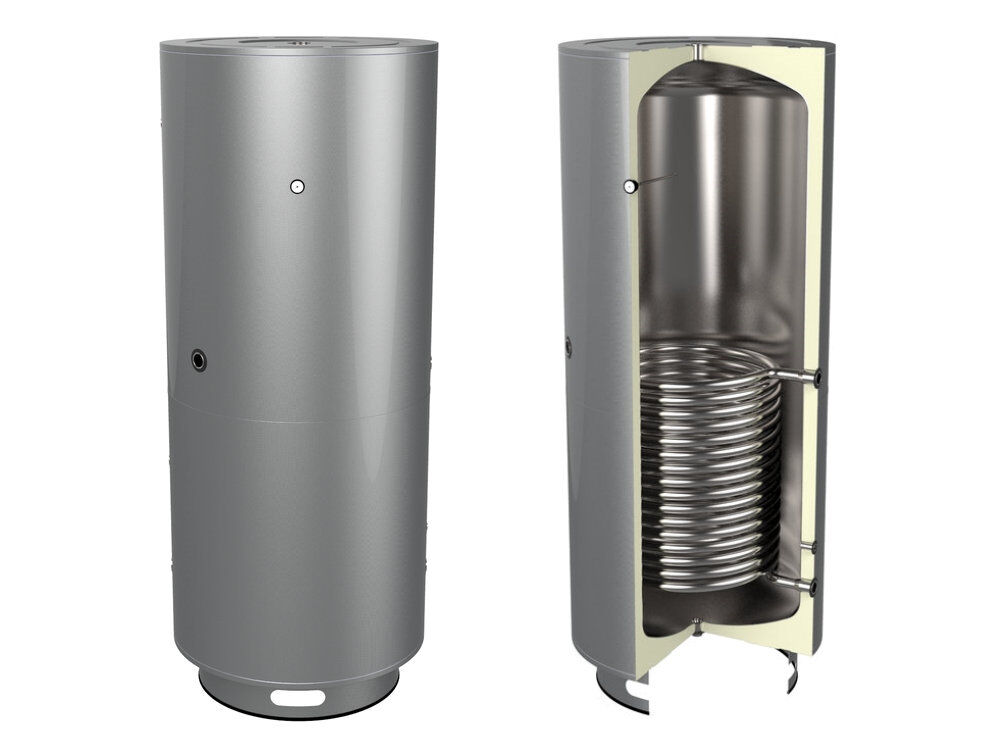
Polyurethane foam for water heaters and coolers is applied in layers to the body of the appliances. It helps prevent heat transfer from the body, which increases operational efficiency and reduces energy consumption. The formulated polyols by Baspar Tose’e Davam Shimi Company, used in polyurethane foam for water heaters and coolers, are produced and supplied in various flame-retardant systems such as B1, B2, and B3 (normal).
This company has the capability to produce different grades of polyols based on density and flame-retardant properties according to customer-defined needs. Next, we will examine the technical parameters influencing the properties of polyols used in polyurethane foam for water heaters and coolers
Variety of Grades
Polyurethane foam is applied as a coating on pipes, water heaters, and chillers to enhance operational efficiency and significantly reduce energy consumption by minimizing heat transfer. Formulated polyol from Baspar Tose’e Davam Shimi Co. are used in producing polyurethane foam for water heaters and chillers, available in various flame-retardant grades such as B1, B2, and B3 (standard). The company can tailor polyol grades based on density and flame resistance to meet customer needs. Below, the technical parameters affecting the properties of polyol used in pipe and water heater insulation foam are detailed.
Grade Specifications
Properties of BATOPOL PIP-D30 Polyol
- Type: Insulation layer for pipes and water heaters
- Brookfield Viscosity: 150-250 cps at 25°C, ensuring optimal flow and ease of application during the foaming process, suitable for both pipe-in-pipe and spray methods.
- Cream Time: 20±5 seconds, indicating the time taken for the polyol-isocyanate mixture to begin foaming, allowing precise control during application.
- Gel Time: 110±10 seconds, representing the point at which the foam transitions to a semi-solid state, critical for achieving uniform structure in prefabricated or sprayed foam.
- Tack-Free Time: 180±20 seconds, the duration until the foam surface is no longer sticky, enabling safe handling and further processing without surface defects.
- Free Rise Density: 35±1 kg/m³, reflecting the foam's lightweight nature in its unconfined state, contributing to ease of installation and material efficiency.
- Hydroxyl Value: 400-450 mg KOH/g, ensuring compatibility with isocyanates for a balanced reaction, resulting in a robust foam structure.
- Water Content: ≤0.1%, minimizing unwanted side reactions during foaming, which enhances the foam’s durability and closed-cell content.
| Specification | Unit | BATOPOL | |||
|---|---|---|---|---|---|
| PIP-D30 | |||||
| Polyol Properties | Type | Insulation layer | |||
| Brookfield Viscosity | cps | 150-250 | |||
| Cream time | sec | 20±5 | |||
| Gel time | sec | 110±10 | |||
| Tack Free Time | sec | 180±20 | |||
| Free Rise Density | kg/m³ | 35±1 | |||
| Foam Properties | Core Density in Foam | kg/m³ | 48-50 | ||
| Closed Cell Content | % | >90 | |||
| Compressive Strength | kPa | ˃150 | |||
| Thermal conductivity (k-factor) | W/mK | 0.024 | |||
| Fire Properties | B2 | ||||
Foam Properties
- Core Density: 48-50 kg/m³, providing a balance between strength and weight, ideal for structural reinforcement of pipes while maintaining insulation efficiency.
- Closed Cell Content: >90%, ensuring minimal water absorption and excellent thermal insulation, critical for preventing heat loss and corrosion in humid environments.
- Compressive Strength: >150 kPa, offering high mechanical resistance to external pressures, making it suitable for direct-buried pipes and high-stress applications.
- Thermal Conductivity (k-factor): 0.024 W/mK, delivering superior insulation performance, reducing energy loss in hot and cold piping systems.
- Fire Properties: B2 classification (DIN 4102), indicating moderate flame resistance, suitable for standard applications, with options for B1 for enhanced fire safety.
- Dimensional Stability: <1% change at -50°C to 135°C, ensuring the foam retains its shape and performance under extreme temperature fluctuations.
- Water Absorption: <2% by volume, enhancing longevity by preventing moisture ingress, which could degrade insulation or promote corrosion.
- Sound Dampening: Reduces operational noise by up to 15 dB, improving acoustic comfort in HVAC and plumbing systems.
Key Features (Updated Based on New Information)
Polyurethane pipe insulation foam is a rigid, porous polymer with a high R-value, minimizing heat transfer based on its low thermal conductivity and thickness. It offers excellent resistance to chemicals, abrasion, and extreme temperatures (-50°C to 135°C). With over 90% closed-cell structure, uniform density, and excellent dimensional stability, it maintains its volume after curing. The foam is waterproof, airtight, and lightweight, reinforcing pipes and reducing corrosion in metal systems by up to tenfold. Its service life exceeds 30 years, and once cured, it is environmentally friendly and safe. Typically applied in a dual-layer system: an inner foam layer for thermal insulation and an outer protective layer of high-density polyethylene (HDPE) or aluminum foil to prevent condensation buildup.
Compared to other foams (e.g., grey polyethylene or nitrile rubber), polyurethane requires less insulation thickness for equivalent performance, delivering long-term energy savings. Its high mechanical strength makes it ideal for direct-buried pipes, preserving heat and blocking penetration of corrosive liquids and gases.
Advantages
Polyurethane foam insulation stands out due to its exceptional performance in diverse applications, from residential plumbing to industrial HVAC systems. Its unique combination of thermal efficiency, durability, and ease of use makes it a preferred choice for professionals and homeowners alike, offering both immediate and long-term benefits in energy savings, system protection, and environmental sustainability.
- Easy and fast installation (especially in pipe-in-pipe systems).
- High resistance to abrasion, moisture, and extreme temperatures.
- Lightweight, reinforcing pipes.
- Excellent dimensional stability and uniform density.
- Prevents air and water penetration, reducing microorganism growth.
- Superior thermal insulation with high compressive strength.
- Reduces metal corrosion by up to tenfold.
- Over 30 years of service life with long-term energy savings.
- Environmentally friendly after curing.
- Requires less thickness than other materials for equivalent performance.
- Prevents energy loss, mechanical damage, moisture buildup, condensation, mold, external freezing, and operational noise.
- Enhances occupant safety and comfort by eliminating excessive heating costs.
Applications
- Protection of hot and cold water pipes, central heating lines, and domestic plumbing.
- Building systems to prevent heat loss, mechanical damage, condensation, mold, and external freezing.
- Underfloor pipes to reduce conductive heat loss.
- Direct-buried pipes to preserve heat and block corrosive penetration.
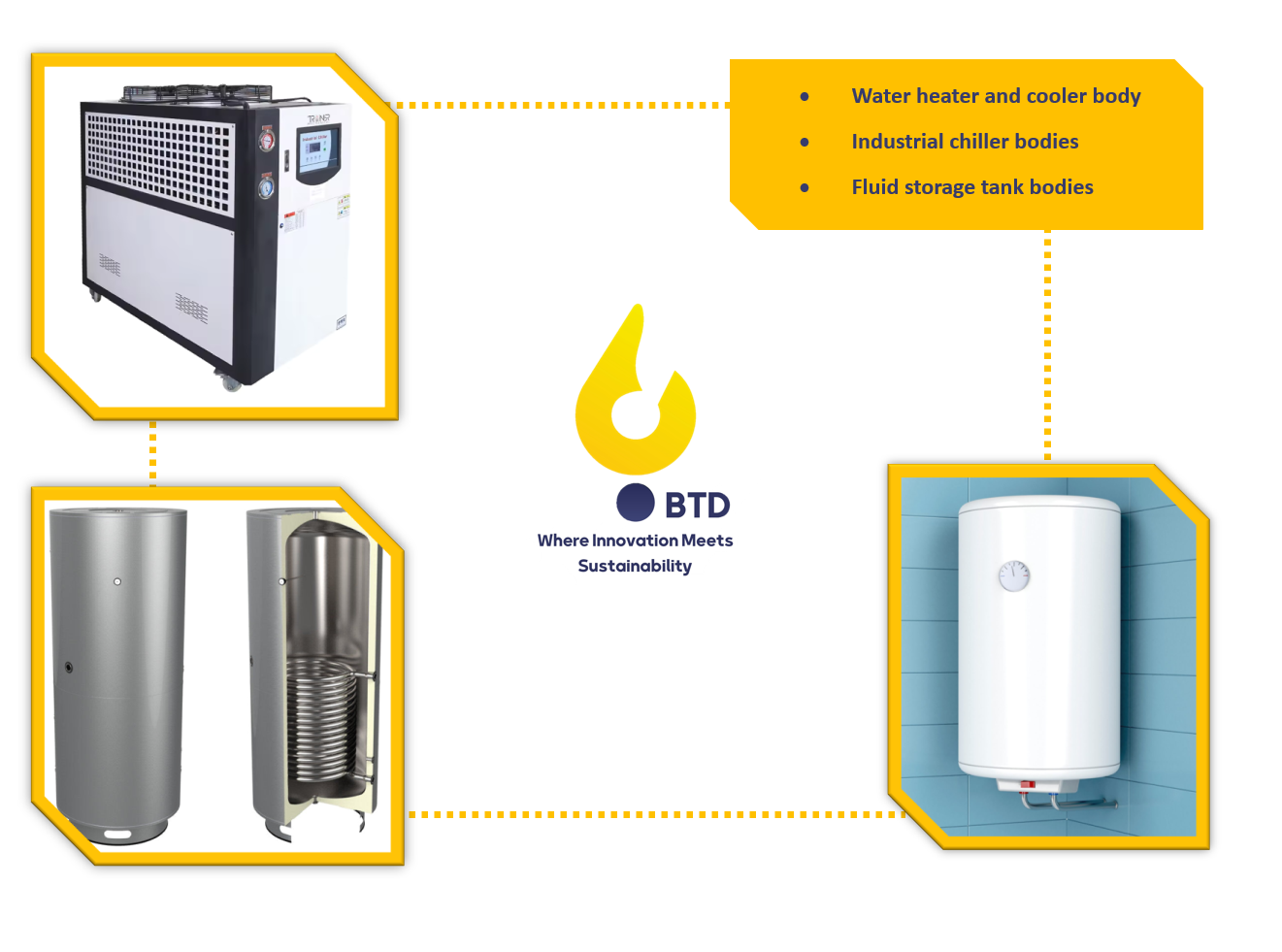
- Water heaters and chillers to enhance efficiency.
- HVAC industries, domestic plumbing, heating, and air conditioning (with self-adhesive options for tight fittings).
Application Methods
Two primary methods are used for producing polyurethane-insulated pipes:
1. Pipe-in-Pipe Method:
Suitable for various pipe diameters, with easy control of the insulation layer and no eccentricity. Continuous process: polyurethane is poured into a moving mold around the pipe, followed by extrusion of a PE coating. Sections are cut as prefabricated halves from PU foam blocks. Advantages: quick installation, high insulation performance, long-term temperature resistance, uniform density. Disadvantages: time-consuming; requires specific adhesives; for fittings, one side of the pipe is longitudinally cut.
2. Foam Spray Method:
Direct spraying of polyurethane foam onto the steel pipe surface using spray equipment. Advantages: direct application. Disadvantages: uneven density; challenges with large protective pipes; potential air gaps; vulnerable coating without a protective layer.
Before insulation, pipe surfaces must be free of oil, corrosion, moisture, or ice. Foams are available as prefabricated (tubular or cut) or spray-applied options.
Installation Options and Comparable Products
- Alternative Foams: Polyethylene foams (cost-effective for domestic plumbing), nitrile rubber (flexible for indoor use, with self-adhesive versions saving 30% installation time), and EPDM (UV-resistant for outdoor use up to 150°C).
- Common Sizes: For 15mm, 22mm, 28mm pipes (13mm thickness, 2000mm length); insulation sleeves of 50-100mm (7.2m length) for freeze protection.
- Customer Tips: Use self-adhesive foam tape for small fittings; for winterization, wrap foam to retain residual heat in pipes to prevent bursting. Brands like Armacell and Frost King are recommended.
frequently asked questions about Pipe and Water Heater Insulation Foam(FAQ)
What are the benefits of polyurethane foam for pipe and water heater insulation
How does polyurethane foam differ from polyethylene or nitrile rubber foams
What are the main application methods for polyurethane pipe insulation?
Pipe-in-Pipe Method: Foam is poured into molds around the pipe, offering precise thickness control and uniform density, ideal for prefabricated systems.
Spray Foam Method: Foam is sprayed directly onto pipes; it’s faster but may result in air gaps or uneven density without a protective layer.